
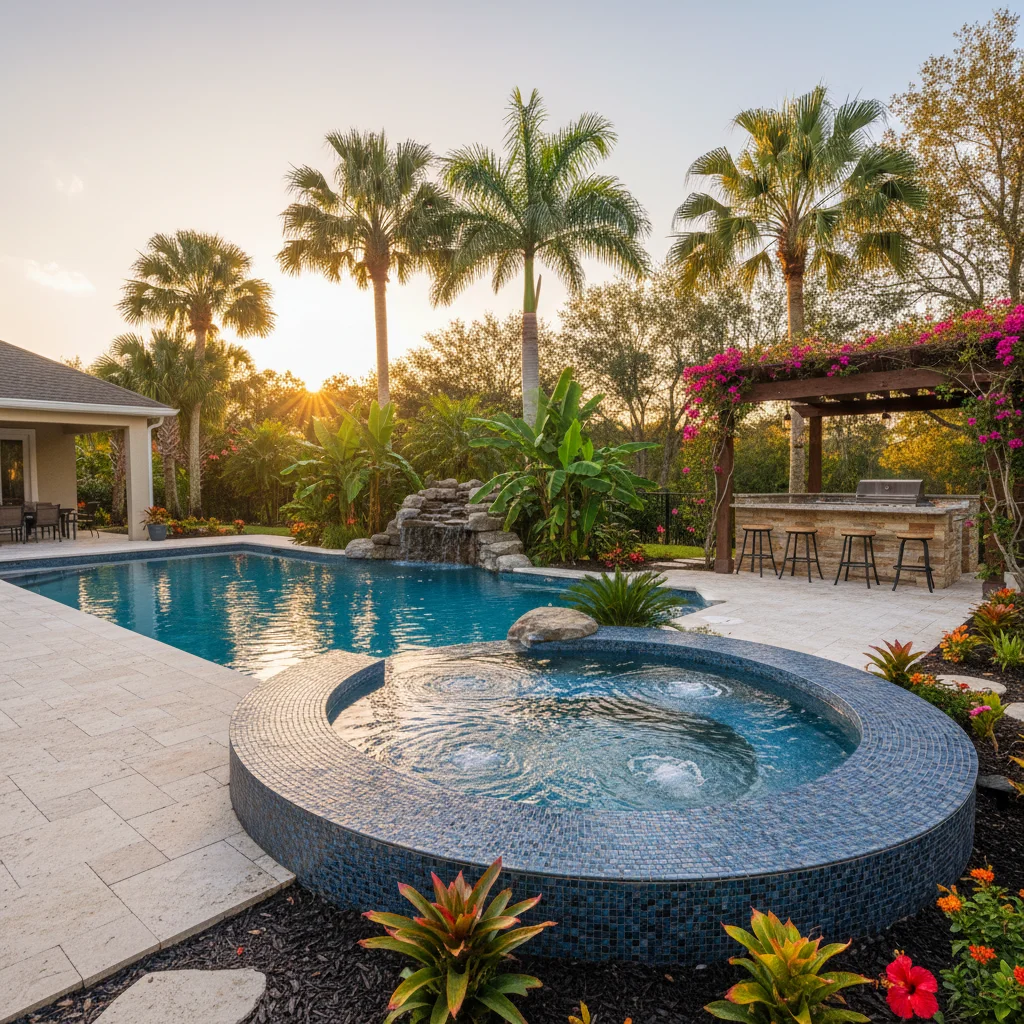

Which is Better: Inground Spa or Above Ground Hot Tub? – Expert Answer for Central Florida
Inground spas offer a seamless, durable, and highly customizable hot tub experience ideal for Central Florida homes, while above ground hot tubs provide affordability and portability. With over 500 pools built locally, Luxe Outdoor Construction helps you choose the perfect spa for your property. Call (321) 895-9112 for expert advice.
In This Article
- What are the differences between inground spas and above ground hot tubs?
- What is the cost comparison and what budget considerations should I have?
- What are the installation and permitting requirements in Central Florida?
- How do maintenance and longevity compare between inground spas and above ground hot tubs?
- What design and customization options are available for inground spas and above ground hot tubs?
- How does local climate affect the usage of inground spas and above ground hot tubs?
- What are expert tips for choosing the right spa?
- Frequently Asked Questions
- Related Resources and Next Steps
What are the differences between inground spas and above ground hot tubs?
Inground spas are built into the ground, often integrated with pools, providing a sleek, permanent feature that enhances property value. Above ground hot tubs sit on the surface and can be relocated, appealing to renters or those with smaller lots. In Central Florida, where sandy soils and high water tables are common, inground spas require professional installation to ensure durability and code compliance.
Above ground tubs are typically pre-fabricated and quicker to install but may not blend as well with landscape designs found in areas like Lake Nona or Windermere.
What is the cost comparison and what budget considerations should I have?
Initial costs for inground spas are higher due to excavation, plumbing, and permits. Prices can range from $15,000 to $30,000 or more depending on size and features. Above ground hot tubs generally cost between $4,000 and $10,000, making them more accessible for many homeowners.
However, long-term value and home integration often favor inground spas, especially in upscale neighborhoods like Celebration or gated communities with HOA rules.
What are the installation and permitting requirements in Central Florida?
Central Florida counties such as Orange and Osceola have distinct requirements for spa permits, especially for inground installations. For example, Orange County mandates engineered plans due to hurricane risk and flood zones.
Above ground tubs usually require minimal permitting but must still meet electrical safety codes. Luxe Outdoor Construction provides guidance for pool construction in Orange County and Osceola County.
How do maintenance and longevity compare between inground spas and above ground hot tubs?
Inground spas tend to have longer lifespans, often 15-20 years or more with proper care, and benefit from durable materials suited for Florida’s humid climate. Above ground tubs may require more frequent repairs and replacement after 7-12 years.
Both require regular water treatment, but inground spas often integrate with pool filtration systems, simplifying upkeep.
What design and customization options are available for inground spas and above ground hot tubs?
Inground spas allow extensive customization including shape, size, seating, jets, lighting, and finishes that complement your pool and landscape. This makes them an ideal choice for owners wanting a personalized backyard retreat near Kissimmee or St. Cloud.
Above ground hot tubs come in standard sizes and styles with fewer options but offer quicker installation and flexibility to relocate.
How does local climate affect the usage of inground spas and above ground hot tubs?
Central Florida’s year-round warm weather encourages frequent spa use. Hurricane season and sandy soil conditions influence construction methods, favoring inground spas built with reinforced materials and proper drainage.
HOA rules in master-planned communities may restrict above ground tub placement or require screening, which should be considered during planning.
What are expert tips for choosing the right spa?
- Assess your property size and future plans: permanent or portable?
- Consult with a custom pool builder in Orlando or nearby city for site-specific advice.
- Consider local permitting to avoid delays, especially in Orange and Osceola counties.
- Factor in maintenance commitment and lifespan for your budget.
- Design for seamless integration with your landscaping and pool area.
Frequently Asked Questions
Inground spas offer greater durability, seamless integration with pools and landscapes, better customization options, and often increase property value. They are designed for long-term use and can withstand Central Florida’s climate and soil conditions better than above ground hot tubs.
Inground spas require excavation, plumbing, electrical work, and permits, often needing engineered plans due to local building codes and hurricane risks. Above ground hot tubs are easier to install, usually requiring only electrical connection and minimal permitting.
Both spa types require regular water care and cleaning, but inground spas benefit from integrated filtration systems and more durable materials, reducing maintenance frequency. Above ground hot tubs may require more repairs and part replacements over time.
Many master-planned communities like Celebration or Lake Nona have HOA rules regulating spa placement, screening, and type. Above ground hot tubs often face more restrictions. It’s important to review your HOA guidelines before installation.
Related Resources and Next Steps
Have Questions About Your Pool Project?
Luxe Outdoor Construction helps homeowners throughout Central Florida. Schedule a free 3D design consultation or call (321) 895-9112.
Luxe Outdoor Construction · Last updated: May 12, 2026